The Future of 3D Modelling: From Standalone Images to Reusable Digital Assets
A three-dimensional model can begin as a design tool and go on to support a product presentation, an interactive website or a virtual environment. That possibility is changing the questions businesses ask when commissioning 3D work. Instead of considering only what one image should look like, they increasingly need to consider how an asset will be maintained, adapted and delivered across different experiences.
This does not mean that one model will automatically work everywhere. A detailed asset created for a high-quality architectural render may be too demanding for a mobile browser. A model prepared for visual presentation may not contain the measurements or data needed for construction. A scan of an existing space may look convincing while still requiring review before it is used for technical decisions.
The future of 3D modelling is likely to involve a mixture of methods, formats and specialist work. The more useful question for a property owner, hospitality business or venue is how to commission assets with a clear purpose today and sensible options for tomorrow.
From a single output to an asset strategy
Traditional 3D projects are often commissioned around a finished output: an image of a proposed development, an animation of a product or a visualisation of an event space. That remains a valid approach. A fixed image can be effective, comparatively simple to distribute and carefully controlled by the creative team.
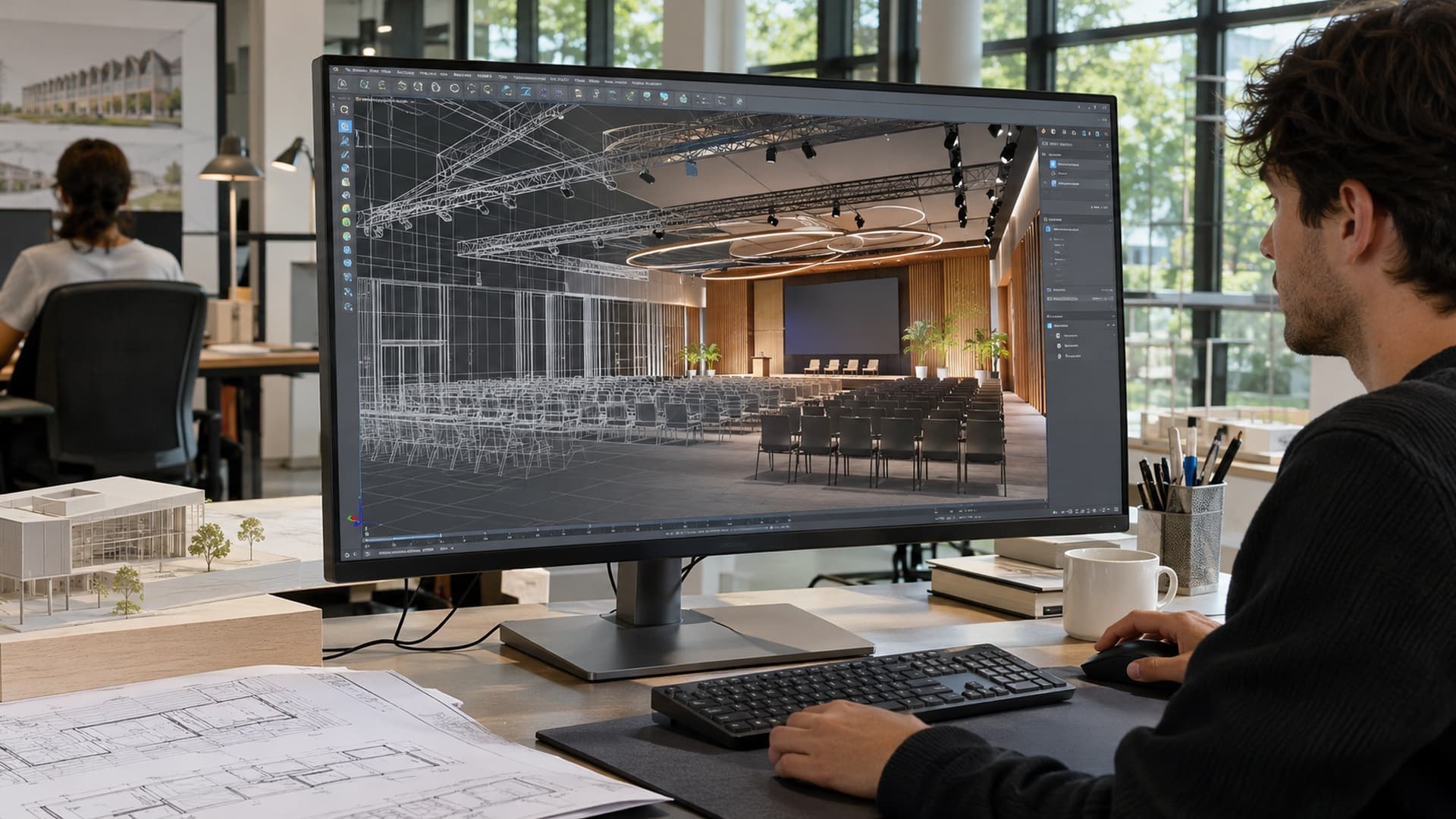
An asset strategy asks an additional question: what else might the underlying model need to support? A venue could use a digital model to illustrate several room arrangements. A property developer might use related assets in still images and an interactive presentation. A hospitality business could present a proposed renovation to stakeholders before construction begins.
These are possible workflows, not an assurance that every model can be reused without additional work. Different outputs need different levels of detail, materials, lighting and interaction. A model may have to be simplified, divided into components or supplied in another format before it works on a new platform.
The first step is to identify likely uses and their importance. If an interactive web viewer is essential, it should be part of the original brief. If reuse is only a possibility, ask what source files and permissions would make a later assessment possible. This helps avoid paying for unnecessary complexity while keeping important options visible.
Real-time experiences and the performance trade-off
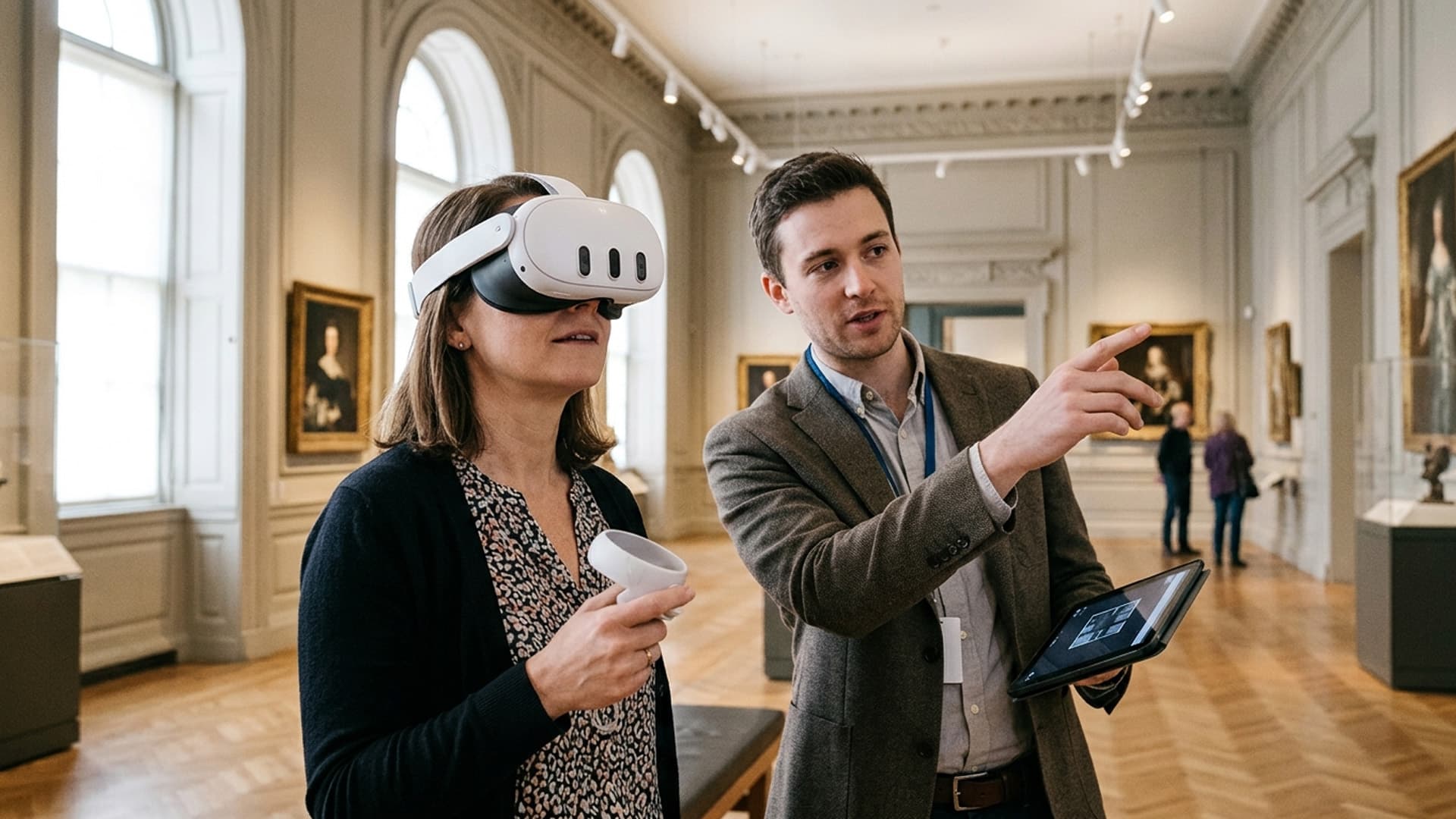
A pre-rendered image can be calculated in advance and delivered as a finished file. A real-time experience generates a view as the user changes the camera or interacts with the scene. That makes it possible to explore a model, change a configuration or move through a virtual space, but it also places demands on the viewer's device.
The design team must balance visual quality with performance. Geometry, texture sizes, lighting, animation and the number of objects all influence how much work the device must perform. A scene that runs smoothly on a powerful workstation may need a different version for a phone or standalone VR headset.
Optimisation is not simply a matter of making every object low detail. The important question is where detail contributes to the task. A close-up of a product finish may require high-quality materials, while a distant background can often be simpler. A venue layout intended for discussion may need accurate relative proportions more than decorative objects in every corner.
Ask for representative testing early. A small sample scene on the intended device can reveal whether the proposed visual quality and interaction are practical. It can also help the team agree on what should happen for users with slower connections or unsupported hardware.
Formats and the promise of portability
Open formats can help move assets between tools, but a shared file extension is not a guarantee that every feature will look or behave identically. Applications support different versions and extensions, and conversion can affect materials, animation or other details. Interoperability is something to test, not assume.
The Khronos Group describes glTF as a runtime 3D asset delivery format. It is designed to help transmit and load 3D content efficiently. The format is relevant to web and real-time workflows, but the suitability of a particular asset depends on how it was prepared and what the target viewer supports.
In 2026, Khronos announced work on glTF 2.1 and complex scenes, describing plans intended to address requirements such as more complex, composed scenes. This is a development to watch for teams managing larger collections of assets. The practical benefit for a project depends on the specification's status and the tools that implement the relevant features when the project is delivered.
A good handover identifies the authoring files, exported formats, texture files, dependencies and licences. It also records which application versions and settings were used. If a business expects to use the asset in another system, include an actual import test in the acceptance criteria rather than relying only on a format name in a proposal.
Capturing existing spaces and objects
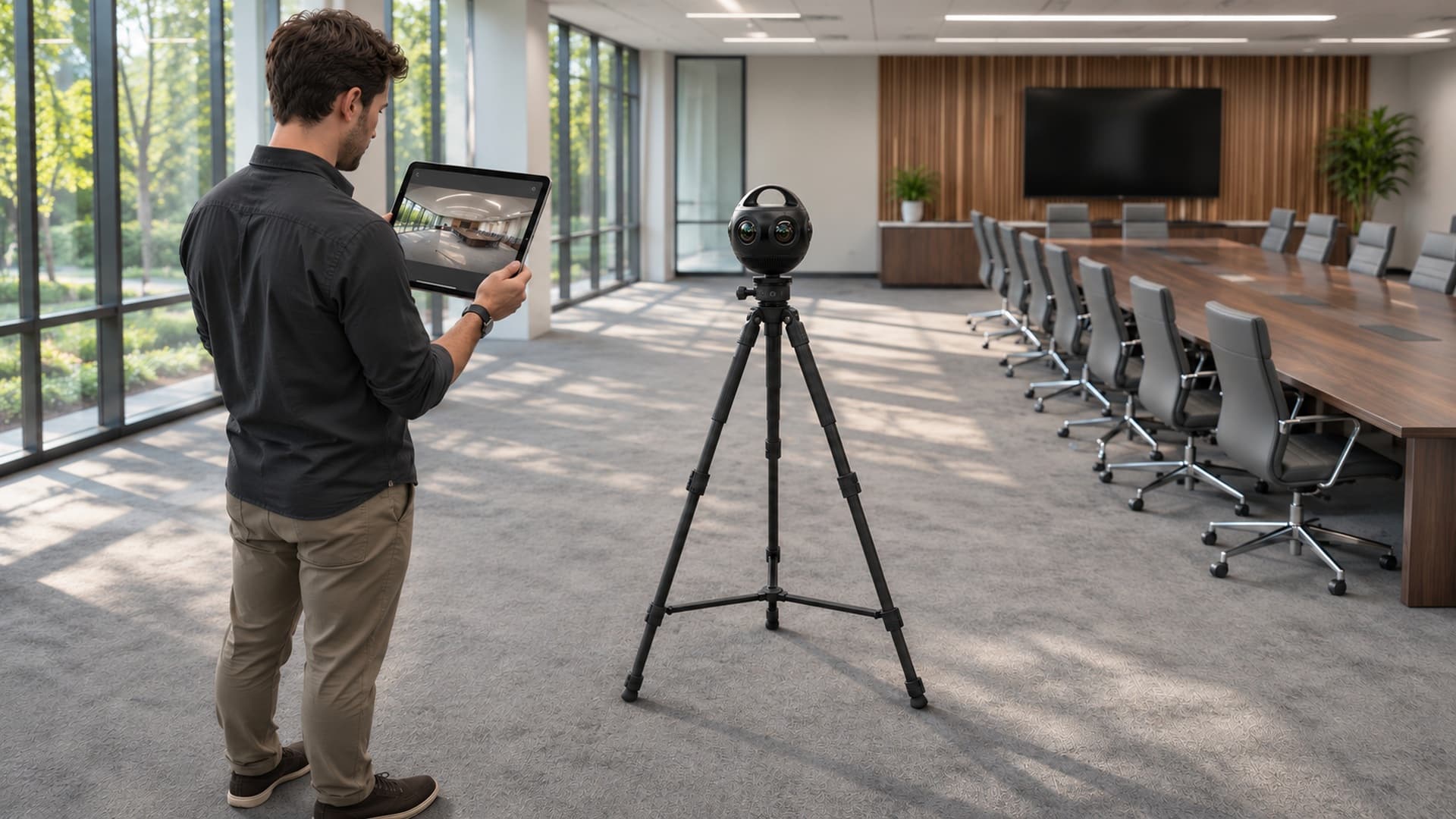
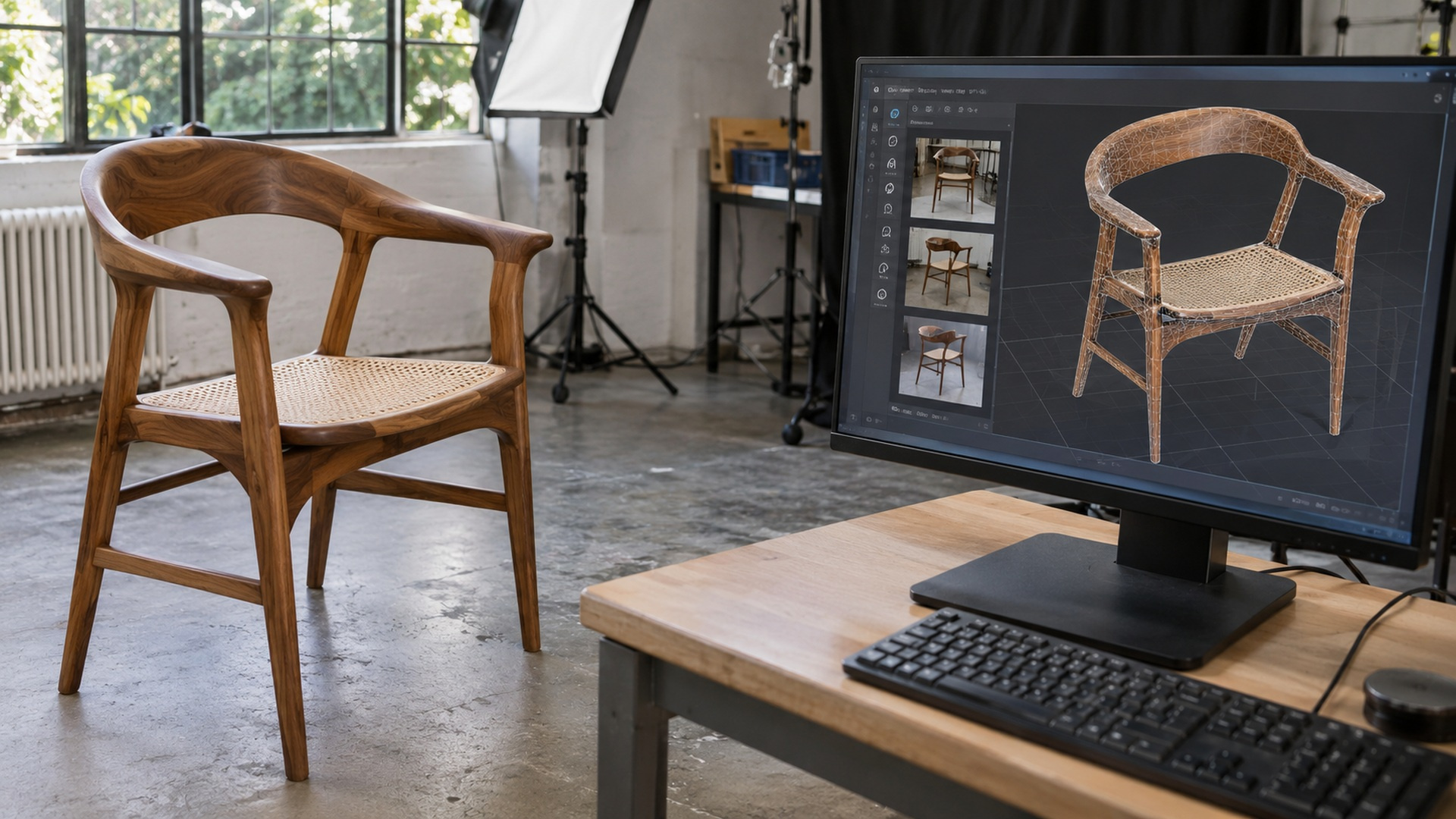
Modelling is not limited to building a scene from drawings or references. Photogrammetry uses overlapping photographs to help reconstruct the shape and appearance of an object or environment. Other capture methods can provide different forms of spatial data. The appropriate approach depends on the subject, access, required accuracy and final use.
Capture can be useful when the character of an existing place matters. A hospitality business might want to document a distinctive interior, while a venue may want a digital representation of an existing feature. Reflective, transparent, moving or poorly lit surfaces can be difficult to capture, and areas that are hidden from the camera may need additional work or remain incomplete.
A visually convincing result should not automatically be treated as a survey. If the model will inform construction, accessibility planning or another measurement-sensitive decision, agree on the required accuracy, reference data and verification method with appropriately qualified specialists. A model prepared for marketing may have a different purpose and tolerance.
It is also important to plan permissions and privacy. Photographs used for reconstruction may include people, private information or neighbouring property. Decide what can be captured, how source material will be stored and who may use it. A technically successful scan is not a substitute for a suitable rights and consent process.
Gaussian splatting and emerging representations
One emerging method attracting attention is 3D Gaussian splatting. In broad terms, it represents a scene using many small elements with properties that contribute to the rendered view. It can create a compelling visual representation from suitable photographic input, particularly for exploring captured environments.
In February 2026, Khronos announced a release candidate for a glTF Gaussian splatting extension. The announcement described an effort to establish a common way to store this type of content and invited industry feedback before ratification. A release candidate is not the same as universal support across software or devices.
For buyers, the important point is to compare the representation with the intended task. A visually rich captured scene may be useful for a walk-through or contextual presentation. It may not provide clean, editable surfaces or the structured components needed to change a room layout. A conventional mesh, a scan-derived model or a combination of techniques may be more appropriate for those requirements.
Ask what can be edited, how the result performs on the target device and whether the source capture can be reused. Also ask about file size, loading time and the process for updating a space after it changes. Emerging methods can be valuable without being the right answer to every project.
AI-assisted workflows and human judgement
Artificial intelligence tools are increasingly used to assist with parts of creative production, such as generating concepts, suggesting materials or helping process source data. Their usefulness depends on the tool, the input and the level of control required. A generated concept can be a starting point for discussion without being a reliable representation of a real property or a construction-ready asset.
Human review remains essential. A model may contain incorrect proportions, inconsistent details or surfaces that do not match the brief. A plausible-looking room can include a doorway that does not exist or omit a feature that matters to a customer. These issues are especially important when visualisations are used to represent a proposed project or support a buying decision.
Rights and confidentiality also need attention. Ask what material is submitted to external services, how it may be used or retained, and whether the resulting assets can be used for the intended purpose. Do not assume that a tool's output automatically resolves questions about source material, ownership or licensing.
The most useful role for automation may be to speed up repetitive work while leaving the team accountable for accuracy, design and final approval. A realistic production schedule should include checking and correction rather than treating generated output as finished by default.
Models as part of a wider information system
A digital model can also be associated with information about the thing it represents. In a property or venue context, that might include room names, capacities, equipment or maintenance information. In a product context, it might include variants and specifications. The value depends on whether the information is accurate, current and connected to a clear use.
Terms such as digital twin are sometimes used broadly. A visual model of a building is not automatically a live operational twin. A more connected system may require reliable data sources, update processes, permissions and a defined relationship between the physical asset and its digital representation.
Before adding data, identify who owns it and how it will be maintained. A room capacity field is only useful if someone updates it when the layout or approved use changes. A system that relies on live information needs a plan for missing data, errors and access control. More data can create more responsibility as well as more possibilities.
Start with one decision the information should support. If an event planner needs to compare room layouts, a small, well-maintained set of capacities and configurations may be more useful than a large model filled with information nobody reviews. Expand the system when there is a demonstrated need and an owner for the additional content.
Ownership, maintenance and long-term value
A model's value can decline if the business cannot update it or understand the conditions attached to its use. Commissioning should therefore cover deliverables as well as visuals. Specify which source files, exports, textures, documentation and licences are included, and whether third-party assets have restrictions.
Clarify how revisions will work. If a venue changes its furniture or a property design is amended, can the existing model be updated? What information will the creator need? Who will approve the result? These questions help the business plan for the life of the asset rather than treating delivery as the end of the project.
Storage and version control matter as well. Keep a record of the approved version, its date and the assumptions on which it was based. For a proposed development, distinguish clearly between a concept, an approved design and the final built outcome. That reduces the risk of using an attractive but outdated visual in a customer-facing context.
Commissioning for a changing future
The most resilient 3D brief begins with a present need and makes future possibilities explicit. Describe the audience, the decisions the model should support, the devices on which it must work and the accuracy required. Identify which outputs are essential now and which are possible later.
Then discuss the modelling or capture method, the review process, expected performance, file formats and rights. Request a test of any critical integration and reserve time for visual and factual review. New formats and tools can make ambitious workflows more practical, but they do not remove the need for a clear brief and responsible production.
A well-planned asset can support more than one conversation over its lifetime. Explore MetaXR's 3D modelling service to discuss the intended use, source material and deliverables for your project.